What Causes the Orange Substance on SF Trees?
Posted by The San Francisco Dog Walker
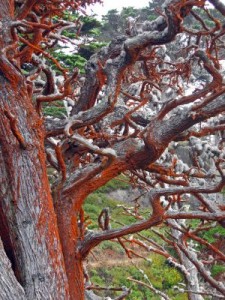
Nope! This is not paint or fire retardant!
If you've walked along the coast near the Cliff House, through Sutro Heights Park, or down the Ocean Beach seawall with your dog, you've probably noticed something unusual: many of the Monterey Cypress trees have a striking orange-rust coloration on their trunks and branches. It's so vivid that many people assume it must be paint, graffiti, or some kind of fire retardant chemical applied by the city.
The truth is much more interesting—and completely natural.
Meet Trentepohlia Aurea: The Orange Algae
The orange-rust color is actually an algae called Trentepohlia aurea variety polycarpa. This fascinating organism has been observable at Sutro Heights Park near Land's End for many years, and park officials and foresters confirm that it poses no health or safety risk to humans, dogs, or the trees themselves.
Over the years, this distinctive algae has spread, and you can now find it along the seawall from The Cliff House all the way down to Ocean Beach. It's become one of the unique visual characteristics of San Francisco's coastal tree population.
Why Does It Grow Here?
This algae isn't found everywhere—it has very specific requirements that make San Francisco's coastline an ideal habitat:
Salt Spray Love
Trentepohlia aurea thrives on ocean salt spray. The constant mist and salt-laden air that roll in from the Pacific Ocean provide exactly what this algae needs to flourish. This is why you'll see it predominantly on the ocean-facing sides of trees and structures.
Monterey Cypress Preference
While this algae can grow on various surfaces, it particularly loves Monterey Cypress trees. These trees, which are native to California's central coast, have bark characteristics that provide an excellent substrate for the algae to colonize and form dense colonies.
Coastal Climate
San Francisco's famous fog and cool, moist coastal climate create perfect conditions year-round. The algae gets moisture from the fog without being washed away by heavy rains, and the moderate temperatures allow it to grow steadily throughout the year.
Is It Harmful?
This is usually the first question dog owners ask me when they notice the orange coloration. The good news is that Trentepohlia aurea is completely harmless:
- Safe for Dogs: Your dog can safely sniff, brush against, or even lick trees covered with this algae without any health concerns
- Non-Toxic to Humans: It poses no risk to people either
- Doesn't Harm Trees: The algae lives on the tree's surface but doesn't penetrate or damage the bark. It's an epiphyte, meaning it uses the tree for support but doesn't parasitize it
- Environmentally Beneficial: Like all algae, it produces oxygen through photosynthesis and is part of the natural coastal ecosystem
The Science Behind the Color
The vibrant orange-rust color comes from carotenoid pigments in the algae cells. These are the same pigments that make carrots orange and tomatoes red. In algae, these pigments serve several purposes:
- Protection from intense sunlight and UV radiation
- Helping the algae survive in exposed, harsh coastal conditions
- Absorbing light for photosynthesis in low-light foggy conditions
Interestingly, Trentepohlia species are among the few terrestrial algae—most algae live in water, but this genus has adapted to live on land in moist environments.
A Unique San Francisco Feature
As a dog walker who's been working in San Francisco for 19 years, I've watched this algae slowly expand its territory. What started as isolated patches has become a defining visual characteristic of our coastal parks. It's one of those details that longtime residents notice gradually, while visitors and newcomers often ask about it immediately.
The orange-tinted trees have become part of the coastal landscape identity, along with the windswept cypress forms and the constant sound of fog horns. In a way, this algae is a visible reminder of San Francisco's unique coastal microclimate—you won't see this exact phenomenon in many other places.
Other Places Where You'll See It
While the Cliff House and Ocean Beach areas are where most dog walkers first notice this algae, you can find it throughout San Francisco's coastal regions:
- Lands End Trail
- Sutro Heights Park
- The entire Ocean Beach seawall
- Fort Funston (on trees near the beach)
- The Presidio's coastal areas
- Any Monterey Cypress trees close to the ocean
What Dog Owners Should Know
From a practical dog-walking perspective, here's what you need to know about this algae:
No Health Concerns
You don't need to worry if your dog rubs against, sniffs, or even licks trees with this orange algae. It's non-toxic and poses no health risk. This is particularly reassuring for those of us who walk multiple dogs and can't always control every surface they investigate!
It Won't Stain
Despite its vivid color, the algae doesn't typically transfer color to dog fur or clothing. It's dry and powdery rather than sticky or wet, so it doesn't create the staining problems you might expect.
Part of the Natural Environment
Teaching your dog to respect natural features like this algae is part of helping them navigate outdoor spaces appropriately. While the algae itself is harmless, encouraging dogs to focus on the trail rather than investigating every tree helps build good walking habits.
Changes Over Time
Long-time San Franciscans have noticed that the prevalence of this algae has increased over the years. This could be due to several factors:
- Changes in fog patterns and coastal moisture
- The aging and expanding bark surface area of maturing Monterey Cypress trees
- Reduced air pollution allowing the algae to thrive better
- Simply more awareness and observation of something that was always present
Similar Algae Worldwide
Trentepohlia species are found in coastal areas around the world, though each location has its own particular species and characteristics. The orange coloration of these algae has been observed for centuries, and in some cultures, the presence of orange-tinted trees was considered a sign of healthy coastal ecosystems.
A Natural Wonder Worth Appreciating
Next time you're walking your dog along Ocean Beach or through the coastal parks, take a moment to appreciate the orange-tinted trees. They're a perfect example of how nature adapts to specific environments and creates unexpected beauty in the process.
It's also a good reminder that not everything unusual or brightly colored in nature is artificial or dangerous. Sometimes the most striking phenomena are completely natural and have been part of the landscape far longer than we realize.
For me, those orange trees have become one of the familiar markers of my favorite dog-walking routes. They signal that we're in that special coastal zone where the ocean's influence shapes everything—from the bent cypress trees to the algae that colors them, to the wind that makes our dogs' ears flap and their noses go wild with exciting scents.
So the next time someone asks you what that orange color is on San Francisco's coastal trees, you'll be able to share the fascinating story of Trentepohlia aurea—nature's own coastal artwork!