My Thoughts on Discount Dog Walkers
Posted by The San Francisco Dog Walker
I remember when I was in my twenties and thirties, there was no way I could afford to take a taxi to work or home after an evening out in San Francisco. They were just so darn expensive! But along came Uber and for people who could not afford a taxi ride, this opened the door for a whole new class of customers—those with lower disposable income. So now, Uber is affordable for most everyone.
The same could be said for dog walkers. Dog walkers seem indispensable for people who work or are limited in their abilities to walk long distances. What once seemed like a luxury for the richest people all of a sudden became a must-have for the working class. Longer hours required at the office made it impossible for people to have a pet unless they could get someone dependable to help them out.
But here's where the Uber analogy breaks down—and where I need to be honest with you about what's happening in the dog walking industry.
The Problem with the "Uber Model" for Dog Care
Lower middle class citizens nowadays seem to demand housekeepers too, so that they can have time to relax on their weekends. I never had any of these luxuries in my young corporate working days and am very surprised by this turn of events. What it means is that young people are making larger salaries in San Francisco, so they can afford the extras—but they're also putting off the purchase of a house or increasing their savings accounts to a much future date, if ever.
And San Francisco is the capital of dog ownership! Everyone has a dog!! But with that increased demand for services has come a race to the bottom in terms of pricing—and unfortunately, quality.
You Get What You Pay For
Picking a dog walker is very much dependent on your income level. There are some of us who are at the top of our game, have years of experience under our belts, and can offer subtle differences (but important differences) that newer dog walkers can't possibly have.
So pricing may or may not be an important factor in choosing your walker—kind of like the taxi vs. Uber debate. But here's what you need to understand about discount dog walking services.
The Hidden Risks of Unlicensed Dog Walkers
By hiring a San Francisco dog walker who does not have a business license and chooses to evade the laws, you are taking a risk. Uber drivers are employees and must abide by the rules set out by their company, but they get away without purchasing a costly special license.
Dog walking companies, however, seem not to abide by such rigid sets of rules. The companies they work for can be very lax in their expectations of their employees. Most of them do not hire employees but rather use contractors. This is a big no-no, and if caught using contractors on a regular basis as if they are employees, the fines are hundreds of thousands of dollars. But there are many dog walking companies that do this and seemingly get away with it.
What's Missing from Discount Services
Most of their employees (contractors) are not certified dog walkers, nor do they have park permits. Very few dog walking companies actually do a background check on their employees (contractors). Everything is fine until one day when something goes terribly wrong.
So if these companies are willing to cheat at dog walking, they are more likely to cheat you in small, unnoticeable ways:
- Instead of a one-hour walk, they take your dog to the park for 20 minutes
- On rainy days, they just sit in the car and then give your dog a pee break, not a walk
- Most of them never clean their autos regularly and your dog might get trampled underfoot by bigger dogs
- Most importantly, your dogs are extremely aroused by the time they arrive at the park—they arrive in a truck, barking and snarling at each other while the driver pulls into the parking lot
- Many times when the dog walkers get to the park, they just stand around and don't tend to the wants and desires of their dogs
The Problem with Too Many Dogs
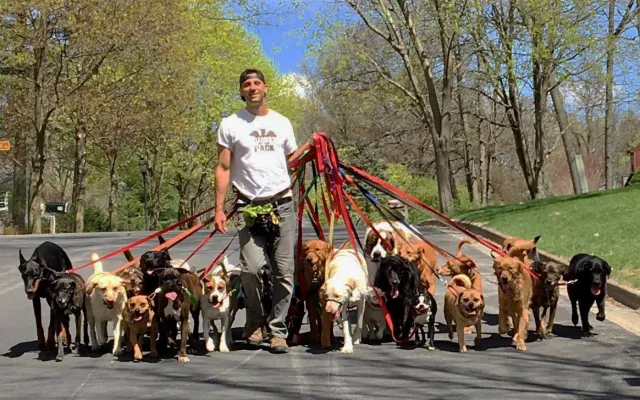
Look at that photo above. How can anyone possibly give individual attention to that many dogs? How can you ensure every dog's safety? How can you notice if one dog is eating something dangerous, getting bullied, or showing signs of distress?
The answer is: you can't.
To make discount pricing work, these walkers need to maximize the number of dogs per trip. But there's a reason professional dog walkers limit their groups to 5-6 dogs maximum—that's the most you can safely and responsibly manage while still providing quality care.
The Subtle Differences That Matter
Like I say, the differences between dog walkers are subtle and mostly go undetected. But over time, they add up:
- Experience: Knowing how to read dog body language and prevent conflicts before they start
- Consistency: Building a relationship with your dog over months and years
- Professionalism: Proper licensing, insurance, and business practices
- Accountability: A reputation to protect and a legitimate business to maintain
- Attention to detail: Noticing when your dog isn't feeling well or needs special care
- Proper transportation: Clean vehicles with adequate space and safety measures
- Quality time at parks: Actually engaging with dogs, not just standing around
Questions to Ask Your Potential Dog Walker
Make sure you ask the right questions so you know the type of person you are dealing with:
- Do you have a business license?
- Do you have insurance and bonding?
- How many dogs do you take on each walk?
- How long are the actual walks (not including transportation)?
- Do you have park permits where required?
- Are you certified in pet first aid?
- Can I see your vehicle?
- What is your emergency protocol?
- Can you provide references from long-term clients?
- How often do you clean your vehicle?
I always bring my credentials and required documentation to consultations—it's a sign of professionalism and accountability. A legitimate dog walker should arrive with:
• Proof of business license, certifications, and insurance
• Service agreements detailing rates, schedules, and what's covered
• Veterinary authorization forms
• Liability documentation including questions about your dog's history
If a dog walker shows up empty-handed, that's a major red flag. Insurance companies require these forms to validate coverage. I once met a substitute walker who had no idea what paperwork I was referring to—despite claiming to be insured. I didn't take the chance.
For boarding services, verify they carry additional coverage beyond standard dog walking insurance. Don't hesitate to ask questions—legitimate professionals expect and welcome scrutiny.
The Ethics of Professional Dog Walking
People without ethics in their business practices are hard to hold accountable if the time ever comes for that need. But it may never come to that, since they seem to get away with it. They will grin and tell you how accomplished they are, but some of us know the real truth.
There is no shortcut to doing the right thing.
After 19 years of professional dog walking in San Francisco, I've seen it all. I've seen discount services come and go. I've seen dogs injured because walkers were managing too many animals. I've seen the stress that poorly managed group walks place on dogs. And I've seen the difference that professional, ethical dog care makes in dogs' lives.
The Bottom Line
Yes, professional dog walking costs more than discount services. But you're not just paying for someone to take your dog outside—you're paying for:
- Peace of mind that your dog is safe
- Proper care and attention
- Professional experience and training
- Legitimate business practices and accountability
- Quality time for your dog, not just the minimum
The Uber model revolutionized transportation because rides from Point A to Point B are fundamentally the same—it's a commodity. But dog care isn't a commodity. Your dog isn't a package being delivered. They're a living being who deserves individual attention, professional care, and genuine concern for their wellbeing.
When it comes to your dog's care, choose wisely. The cheapest option is rarely the best option.
I encourage every dog owner to do their research, ask the tough questions, and choose a dog walker based on qualifications and ethics—not just price. Your dog deserves nothing less.