Horses on Fort Funston Beach
Posted by The San Francisco Dog Walker
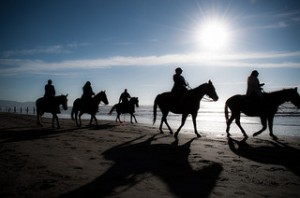
Have you ever run into horseback riders at Fort Funston? Well if not, you probably will someday soon. Fort Funston is a popular destination for equestrians of all skill levels, and as the weather improves, you'll see more riders enjoying the beach trails. For dog owners, especially those of us who regularly walk dogs at Fort Funston, knowing how to handle these encounters safely is essential.
Why Fort Funston Attracts Equestrians
Fort Funston offers something special for horse riders—miles of wide, sandy beach where horses can run freely, spectacular ocean views, and varied terrain that provides both gentle rides and more challenging trails. The GGNRA (Golden Gate National Recreation Area) specifically permits horseback riding in many areas, including Fort Funston, making it one of the few places in San Francisco where riders can enjoy beach riding.
The same qualities that make Fort Funston perfect for off-leash dog play—the open space, varied terrain, and natural beauty—also make it attractive to horseback riders. This means we all need to share the space respectfully and safely.
How Dogs Typically React to Horses
Don't know how your dog will react to a horse? You're not alone. Most city dogs have never encountered horses, and their reactions can range from curious to frightened to overly excited.
Common Dog Reactions Include:
- Intense Curiosity: Many dogs want to run up and sniff this fascinating new creature
- Prey Drive Activation: Some dogs, especially herding breeds, may try to chase or herd the horse
- Fear: The size of horses can frighten dogs who've never seen them before
- Excitement Barking: Dogs may bark enthusiastically at horses, which can startle them
- Protective Behavior: Some dogs may view horses as a threat to their owners and act defensively
Safety First: Voice Control
When you see a horse coming, if your dog is under voice control and you trust them, you do not need to leash your dog. Simply call them to your side and have them sit or stay while the horse passes. However, if your dog is inexperienced or unreliable, leash them immediately. Here's why this matters:
- Horses can be startled by running dogs, potentially causing the rider to fall
- A kicked dog can suffer serious or fatal injuries
- Both dogs and horses are animals that can be unpredictable in certain situations
- Mutual courtesy makes Fort Funston safe and enjoyable for everyone
Most untrained or inexperienced dogs will have a natural curiosity around horses and may run up to sniff or bark, which may startle the horse and cause the rider to fall, or at the very least, the rider may become angry with you and make it an unpleasant encounter for everyone. This is why voice control is so important—a well-trained dog under voice control can safely coexist with horses on the trail without needing to be leashed.
Conditioning Your Dog to Accept Horses
If you find that your dog seems to be overly interested in the new "beast" on the beach, then I recommend that you do some conditioning. I have had very good luck with dogs that are reactive to horses on the trail by using this systematic approach:
Step 1: Find a Stable
Take your dog on a private walk to a local stable. Keep them on leash, of course. San Francisco has several stables where you can do this training:
- San Francisco Police Mounted Unit stables
- Nearby stables in Pacifica or San Mateo
- Any facility where horses are calm and accustomed to dogs
Step 2: Use Positive Reinforcement
Coax your dog near the horses with cookies and lots of baby talk (yes, this is actually a technical dog training term!). The goal is to create positive associations between horses and good things happening.
Step 3: Keep Distance Initially
Start far enough away that your dog notices the horses but doesn't react strongly. Gradually decrease the distance over multiple sessions as your dog becomes more comfortable.
Step 4: Repeat and Reinforce
After a few times, the dogs will feel more secure and will relax around horses. This isn't a one-time fix—it requires consistency and patience.
Step 5: Practice at Fort Funston
Once your dog has had several successful stable visits, practice at Fort Funston when horses are present. And if you should see horses on the beach, you should call your dog over to you for a treat. If you have conditioned the dog well enough, they should not react to the horses passing, but rather come over to you and sit facing you when you call out "cookie" and then request that they "sit" quietly while the horses pass.
Beach Etiquette: Sharing the Space
As a professional dog walker who uses Fort Funston regularly, I've developed some best practices for sharing the space with horses:
When You See Horses Approaching:
- If your dog is under voice control: call them to your side and have them sit or stay
- If your dog is inexperienced or unreliable: leash them immediately
- Move to the side of the trail or beach, giving horses a wide berth
- Call out a friendly greeting to let the rider know you're aware of them
- Keep your dog calm and focused on you (not the horse)
- Wait until the horse has passed completely before releasing your dog or allowing them to resume play
Communicate with Riders:
Communication helps everyone. You might ask, "Is your horse okay with dogs?" and riders might ask about your dog's training. This simple dialogue can prevent problems and shows mutual respect. Remember that both dogs and horses can be unpredictable, and courtesy goes both ways.
Understanding Horse Behavior
Knowing a bit about how horses think helps dog owners understand the dynamics of these encounters:
- Flight Animals: Horses are prey animals whose instinct is to flee from perceived threats. A suddenly barking dog can trigger this flight response.
- Lateral Vision: Horses have wide peripheral vision but poor depth perception directly in front. A dog running straight at them can be particularly startling.
- Varying Training Levels: Some horses are "bombproof" around dogs; others are green (inexperienced) and easily spooked.
- Powerful Animals: Even a gentle, well-trained horse can accidentally injure a dog if startled. A kick from a horse can be fatal.
- Rider's Responsibility: Riders who bring horses to multi-use areas like Fort Funston accept that their animals may encounter dogs and other surprises.
Shared Responsibility on Multi-Use Trails
In GGNRA lands, both dogs and horses have a right to use designated areas. It's a shared space where everyone needs to be cautious:
- Dog owners are responsible for controlling their dogs, whether on or off leash
- Voice control is required in off-leash areas—your dog must respond reliably to commands
- Horse riders are responsible for their animals and should be aware that horses can be unpredictable
- Both parties should communicate and show mutual respect
- Well-trained dogs with solid recall can remain off-leash if under voice control
- Horses are large, powerful animals that can kick or bolt—riders accept this risk when bringing them to multi-use areas
Signs Your Dog Has Reliable Voice Control Around Horses
Your dog is ready to encounter horses off-leash when they:
- Show calm interest rather than intense excitement when seeing horses
- Respond immediately to your recall command, even when horses are present
- Can sit and stay while a horse walks past
- Don't bark, lunge, or pull toward horses
- Look to you for guidance when encountering horses rather than reacting independently
Building a Positive Community
Fort Funston's magic comes from being a space where dogs, horses, hikers, and nature lovers can all enjoy the spectacular coastal environment. When everyone practices good etiquette and mutual respect—recognizing that both dogs and horses are animals that can be unpredictable—everyone benefits.
I've had wonderful interactions with riders who appreciate well-trained dogs, and I've appreciated riders who control their horses appropriately in multi-use areas. These positive encounters build a culture of mutual respect that makes Fort Funston the special place it is.
What to Do If Things Go Wrong
Despite best efforts, sometimes encounters don't go as planned. If your dog gets too close to a horse or a horse reacts unexpectedly:
- Call your dog back immediately using your most urgent recall command
- Move away to give the horse and rider space to calm down
- Communicate calmly with the rider—most are understanding that both animals can be unpredictable
- Use this as a learning experience to refine your dog's training if needed
- Remember that accidents can happen even with well-trained animals on both sides
The Rewards of Proper Training
The effort you put into conditioning your dog to accept horses pays off in many ways. Not only will your Fort Funston visits be more relaxed and enjoyable, but your dog will have learned impulse control and responsiveness that transfers to other situations. A dog who can calmly pass a horse is also better equipped to handle other distractions and surprising encounters.
After 19 years of dog walking in San Francisco, I can tell you that well-socialized, well-trained dogs are simply happier dogs. They experience less stress, enjoy more freedom, and can participate in more activities. Teaching your dog to coexist peacefully with horses is part of this broader socialization that makes them confident, well-adjusted companions.
So the next time you're at Fort Funston and see horses in the distance, see it as an opportunity rather than a problem. With proper preparation and good etiquette, dogs and horses can share San Francisco's beautiful beaches safely and harmoniously. Happy trails!