Black Sand at Fort Funston
Posted by The San Francisco Dog Walker
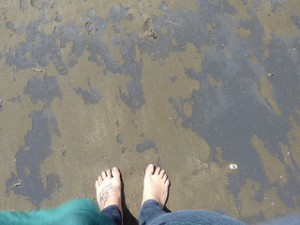
If you've walked your dog at Fort Funston after a storm, you've probably noticed something striking: dark, almost black streaks running through the sand, sometimes covering large sections of the beach. Many dog owners worry this is oil pollution, perhaps remnants of a spill. But the truth is far more interesting—and completely natural.
That black "stuff" on the beach is magnetite, an iron-based mineral that's been part of Fort Funston's geology for thousands of years. Understanding what it is and where it comes from reveals the fascinating volcanic history beneath our feet.
What Is Magnetite?
Magnetite is a type of iron ore—specifically, iron oxide (Fe₃O₄)—and it's one of the most magnetic naturally occurring minerals on Earth. It's black or dark gray, heavy, and has a metallic luster when freshly exposed.
At Fort Funston, magnetite exists as tiny grains mixed throughout the sandstone cliffs. When the cliffs erode, these heavy mineral grains are released onto the beach. Because magnetite is denser than regular quartz sand, it behaves differently when waves wash over it.
Where Did Fort Funston's Magnetite Come From?
The black sand at Fort Funston has a dramatic origin story that goes back thousands of years:
Ancient Volcanic Eruptions
The magnetite in Fort Funston's cliffs is volcanic ash thrown from Mount Lassen during eruptions thousands of years ago. Mount Lassen, located about 250 miles north of San Francisco in the southern Cascade Range, is an active volcano that has erupted many times throughout history. Its most recent eruptive period was from 1914 to 1917, but the magnetite at Fort Funston dates to much earlier eruptions.
When volcanoes erupt explosively, they blast ash high into the atmosphere. Depending on wind patterns and the size of the eruption, this ash can travel hundreds of miles before settling. Over millennia, layers of volcanic ash accumulated in what is now the San Francisco area, mixing with local sediments to form the sandstone cliffs we see today.
Embedded in the Cliffs
The volcanic ash contained iron-rich minerals, including magnetite. As these sediments were compressed and cemented together over thousands of years, the magnetite remained locked in the rock as dark veins and layers running through the sandstone.
You can see these dark streaks clearly if you look closely at Fort Funston's cliffs—they're the same material that ends up as black sand on the beach.
How Black Sand Forms on the Beach
Black sand accumulates through a process called density separation:
Erosion Releases the Minerals
Fort Funston's cliffs are constantly eroding. Rain, wind, waves, and gravity all work to break down the soft sandstone, releasing the embedded magnetite grains onto the beach below.
Waves Sort by Weight
Here's where physics takes over. Magnetite is much heavier than regular quartz sand:
- Magnetite specific gravity: 5.2 (very heavy)
- Quartz sand specific gravity: 2.65 (much lighter)
When high-energy waves wash across the beach, they carry away the lighter quartz sand but leave the heavier magnetite behind. This is the same principle used in gold panning—heavier materials settle while lighter ones wash away.
Black Sand Layers Form
As storm after storm removes lighter sand, the magnetite concentrates into visible black layers. These deposits can be:
- Thin streaks running across the beach
- Thick layers several inches deep
- Concentrated patches in low-energy areas
- Dark rings left by receding waves
After major winter storms that strip away large amounts of regular sand, Fort Funston can look dramatically different—sometimes the beach appears almost entirely black.
The Magnet Test
Want to prove to yourself that the black sand is magnetite? Bring a magnet to the beach and run it through the dark sand. You'll see the magnetite grains jump right to the magnet, clinging to it in a fuzzy coating.
This makes for a fun educational activity if you're bringing kids to the beach—and it's harmless for dogs to watch (though don't let them eat the magnet!).
Other Dark Minerals in the Sand
Magnetite isn't the only dark mineral at Fort Funston. The black sand also contains:
Amphiboles
These are silicate minerals that form long, dark crystals. Common amphiboles include hornblende, which appears black or dark green. Amphiboles are not magnetic, so they remain in the sand after you've collected all the magnetite with your magnet.
Pyroxenes
Another group of dark silicate minerals, often dark green to black. Like amphiboles, they're not magnetic.
Ilmenite
An iron-titanium oxide that looks similar to magnetite but is only weakly magnetic. It's also black and heavy.
Both amphiboles and pyroxenes tend to fracture into very small grains that collect on the beach surface. Because they're smaller and lighter than magnetite grains, they can accumulate on top of the sand even when magnetite is buried below.
Seasonal Changes in Black Sand
The amount of black sand visible at Fort Funston changes dramatically with the seasons:
Winter: Maximum Black Sand
During winter storm season (November through March), powerful waves strip away large amounts of lighter beach sand, exposing and concentrating the underlying magnetite. After a series of winter storms, you might see extensive black sand covering much of the beach.
Summer: Sand Returns
In summer, gentler wave action allows lighter sand to gradually return to the beach, burying the black sand layers. By late summer and early fall, the black sand may be barely visible, hidden beneath fresh deposits of regular sand.
After Major Storms
The most dramatic black sand displays occur after intense winter storms. The Cosco Busan oil spill in 2007 occurred during a time when Fort Funston's beach was already showing extensive black sand from storm erosion, which caused some initial confusion about whether the dark material was oil or natural mineral deposits.
Is Black Sand Safe for Dogs?
Yes, magnetite and the other dark minerals at Fort Funston are completely safe for dogs. They're natural minerals that have been present at the beach for thousands of years.
Things to Remember:
- It's not toxic: Magnetite is iron oxide, the same mineral found in many soils. It's not poisonous
- It's not hot: Dark sand can absorb more heat on sunny days, but Fort Funston's cool foggy climate usually prevents this from being an issue
- It won't stain: Unlike mud, magnetite doesn't leave permanent stains on fur or fabric
- It rinses off easily: A quick rinse after the beach removes any black sand from your dog's coat
Distinguishing Black Sand from Oil
After the Cosco Busan oil spill in 2007, many San Franciscans became understandably concerned about dark substances on beaches. Here's how to tell the difference:
Black Sand (Magnetite):
- Appears as distinct grains or layers
- Doesn't smell like petroleum
- Doesn't feel oily or sticky
- Washes off easily with water
- Attracted to magnets
- Present year after year in the same locations
Oil:
- Has a strong petroleum smell
- Feels sticky or greasy
- Forms globs or mats rather than distinct grains
- Difficult to wash off
- Not magnetic
- Typically accompanies reports of spills or sheens on water
If you're ever unsure, it's always better to keep your dog away from dark substances on the beach until you can confirm what they are. But the regular black sand at Fort Funston is a natural, harmless feature that's been there far longer than we have.
The Bigger Geological Picture
The black sand at Fort Funston is a visible reminder of the Bay Area's dynamic geology. The cliffs tell a story of:
- Ancient volcanic eruptions in the Cascade Range
- Wind carrying ash hundreds of miles
- Sediment accumulation over thousands of years
- Compression and cementation into sandstone
- Ongoing erosion exposing these ancient deposits
- Waves sorting minerals by density
Every layer in the cliffs, every dark streak in the sand, is part of this ongoing geological story.
Fort Funston's Ongoing Changes
The cliffs at Fort Funston continue to erode at a significant rate—several feet per year in some areas. This erosion constantly releases more magnetite onto the beach, ensuring that black sand will remain a feature of Fort Funston for many years to come.
However, the same erosion that creates the black sand also threatens the bluff-top trail and parking areas. The National Park Service closely monitors cliff stability and has closed or relocated trail sections as erosion advances.
The Bottom Line
The black sand at Fort Funston is magnetite and other dark minerals released from eroding volcanic ash deposits in the cliffs. It's completely natural, perfectly safe for dogs, and has been part of the beach for thousands of years.
After 19 years of walking dogs at Fort Funston, I've seen the beach transform from golden sand to dramatic black stretches countless times. It's one of the unique features that makes Fort Funston such a special place—not just a beautiful beach, but a window into the volcanic history of Northern California.
So next time you see those dark streaks in the sand, don't worry about oil spills or pollution. Instead, you're looking at iron-rich minerals that traveled 250 miles from Mount Lassen thousands of years ago, locked in rock, and now revealed by the patient work of wind and waves.
Let your dog play in it. It's just sand—just heavier, darker, and with a much more interesting story than the regular stuff.